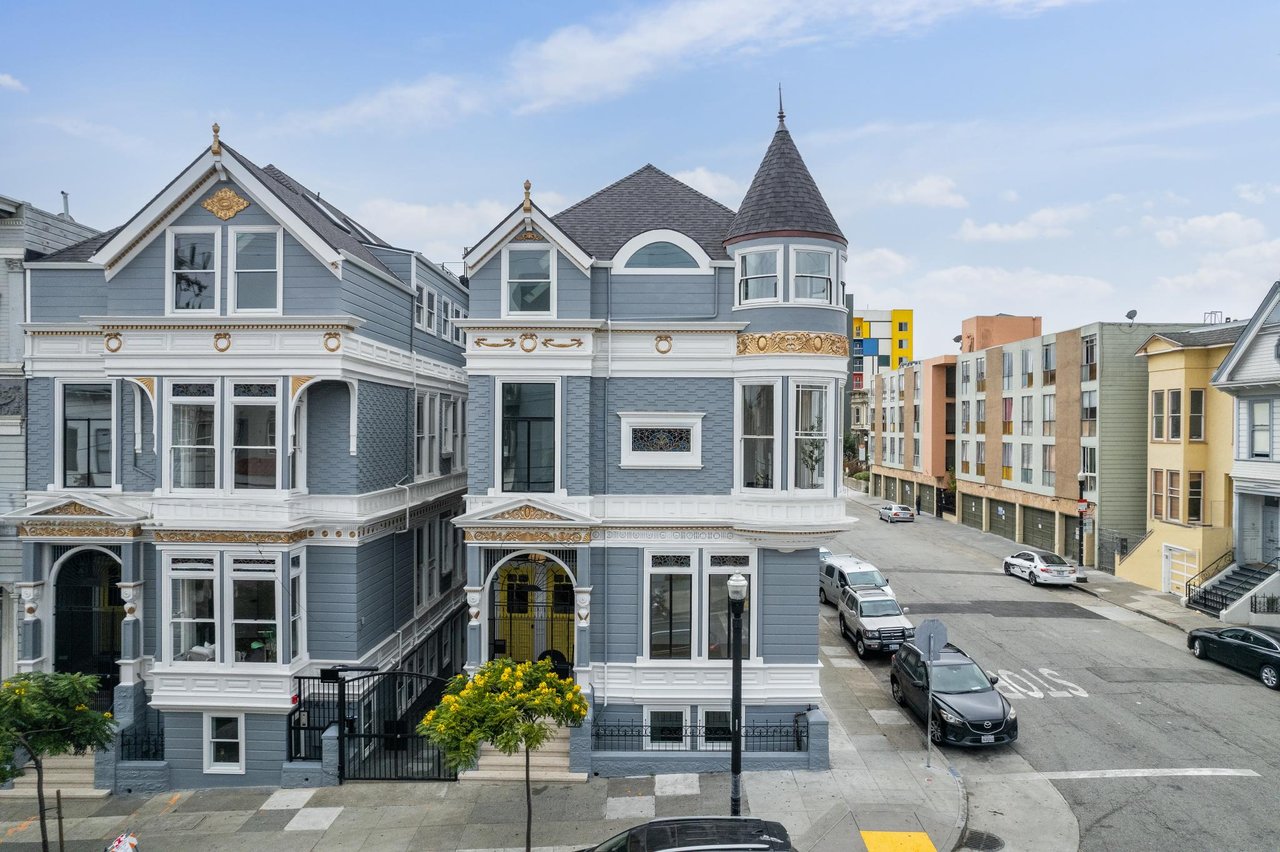
What Is a TIC in San Francisco?
A TIC, or tenancy in common, is a form of property ownership in which buyers own a percentage of an entire building, with a TIC agreement granting them exclusive rights to occupy a particular home. In San Francisco, TICs are a well-established part of the housing market and can offer compelling opportunities for buyers.
For buyers who have never encountered TIC ownership before, the term can make an otherwise appealing home suddenly feel complicated. In reality, some of the city’s most compelling homes are TICs.
As the #1 TIC agent in San Francisco by transaction count in 2025, our team has extensive experience helping buyers and sellers navigate this unique segment of the market. We generally encourage buyers not to eliminate TICs from their search simply because the ownership structure is unfamiliar. In a city with limited housing inventory, the home that is best for you may simply happen to be a TIC.
What exactly is a TIC?
Unlike a condominium owner, a TIC owner does not own an individually mapped unit. Instead, each owner holds a percentage interest in the entire property.
The TIC agreement establishes each owner’s right to occupy a particular home and typically identifies exclusive-use spaces such as parking, storage, decks, or gardens.
While the legal ownership structure is different, the day-to-day experience of living in a well-structured TIC can feel remarkably similar to living in a condominium.
The practical differences tend to become more important when it comes to financing, property taxes, and the building’s governing documents.
Why do buyers consider TICs?
One of the biggest reasons is simply San Francisco’s housing inventory.
A buyer may be looking for three bedrooms, parking, outdoor space, and a particular neighborhood, and the home that checks those boxes happens to be a TIC.
TICs are also frequently found in the beautiful older buildings that define many San Francisco neighborhoods. For buyers drawn to period details, gracious floor plans, high ceilings, and architectural character, keeping TICs in the search can open up considerably more opportunity.
There can also be a price advantage. In our experience, TICs have historically traded at a discount to comparable condominiums. Depending on the property and market, TICs can offer buyers more space, a better location, or a more compelling home at a lower price point than a comparable condominium.
Is buying a TIC more complicated?
There are additional considerations when purchasing a TIC, but our role is to demystify the process, explain the differences, and help you make an informed decision. For most buyers, the three primary differences to understand are financing, property taxes, and the TIC agreement.
Financing is more specialized. Unlike a condominium, which can generally be financed through a wide range of banks and mortgage lenders, TIC financing is available through a smaller group of lenders that specialize in these properties. Most TIC buyers today use individual, or “fractional,” loans, meaning each owner is responsible for his or her own financing rather than sharing a mortgage with the other owners in the building. Financing has also become significantly more competitive in recent years, making this less of a hurdle than many buyers initially expect.
Property taxes are handled differently. Because the TIC building remains one legal parcel, the property receives a single tax bill rather than separate bills for each home. The TIC agreement establishes how the property tax bill is divided among owners, typically taking into account each owner’s purchase price and applicable assessment adjustments. We typically like to see an accountant managing this process for the HOA so that each owner’s responsibility is clearly calculated and tracked. Importantly, this does not mean TIC owners inherently pay more in property taxes than condominium owners; the difference is primarily in how the taxes are administered.
The TIC agreement is especially important. This is the document that establishes how ownership of the building works in practice. Among other things, it should clearly define each owner’s exclusive-use areas, such as the individual home, parking, storage, decks, or outdoor space. It can also govern alterations, rentals, sales, shared expenses, and what happens if an owner fails to meet certain financial obligations. We want to see an agreement drafted or updated by an attorney experienced in San Francisco TICs, and we review its terms carefully as part of a buyer’s due diligence.
Not all TICs are created equal
Understanding how TIC ownership works is only the first step. The structure and health of the individual TIC matter just as much as the ownership type itself.
When we evaluate a TIC, we look beyond the home itself. We review the TIC agreement, building budget and reserves, upcoming projects, financial management, and how responsibilities are divided among the owners.
In smaller buildings, we also pay attention to the relationship among the homeowners. Meeting minutes can provide valuable insight into how effectively the owners have historically made decisions and managed the property together.
We also look closely at how parking, storage, outdoor areas, and other exclusive-use spaces are documented. If future condominium conversion is a possibility, that requires another layer of investigation.
In other words, the question is not simply whether TICs are good or bad. It is whether a particular TIC is a good fit for a particular buyer.
Should you consider a TIC?
For many San Francisco buyers, we believe TICs are worth keeping in the search.
You may ultimately decide that a condominium is the better fit. But we would rather evaluate a beautiful home and its ownership structure carefully than eliminate an otherwise excellent property simply because it says “TIC” in the listing.
A well-structured TIC can provide an opportunity to own a distinctive San Francisco home, often with more space, character, or a better location at a more accessible price point than a comparable condominium.
And if the right home happens to be a TIC? We evaluate the TIC.
Considering a TIC in San Francisco?
Whether you are exploring TIC ownership for the first time or evaluating a specific property, The Wilkerson Team can help you understand the ownership structure, review the building’s financials, and navigate specialized financing.
Contact The Wilkerson Team to discuss whether a TIC fits your goals, budget, and ownership preferences.
This article is intended for general informational purposes and is not legal, tax, or lending advice.